

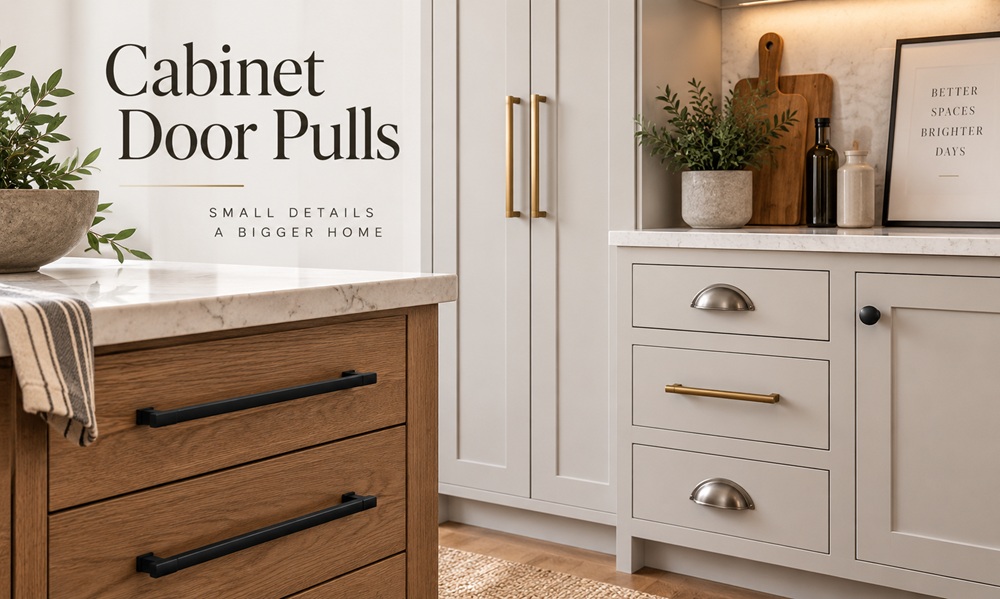
Start with the holes. If you are replacing old hardware, the spacing between the screw holes on your cabinet doors decides which pulls will fit without drilling. Measure from the center of one screw hole to the center of the other. That number, usually called center-to-center, is the most important measurement you will take.
Once you know it, the rest of the decision is about size, shape, finish, and where to put them. Cabinet door pulls can change the look of a kitchen or bathroom more than their small size suggests, so a little planning goes a long way.
Measuring what you already have
Take your measurement from one screw hole center to the other, not from the outer ends of the pull. Use a ruler or tape that shows fractions or millimeters, because many pulls come in metric sizes that look close to inch sizes but do not match exactly.
Common center-to-center sizes include 3 inches, 3-3/4 inches, and 5 inches, along with larger sizes for big doors and drawers. If your existing holes measure something unusual, look for an adjustable pull, or plan to fill and redrill. A wood filler and a steady drill guide can handle that, though it adds time.
Check the thickness of the door too. Screws that are too short will not bite, and ones that are too long can poke through the face. Most pulls ship with standard screws, but cabinets with thick doors may need longer ones.
Pulls compared with knobs
Pulls give you a larger grip and tend to be easier to use, particularly with wet or full hands, which is why they are popular on kitchen drawers and large doors. Knobs are compact and work well on small doors or in places where a full handle would look crowded.
Many designers mix the two, using knobs on upper doors and pulls on lower drawers. That is a style choice rather than a rule. Choose what feels comfortable in daily use and looks balanced with the size of your cabinets.
Choosing the right length
Length is where people often go wrong. Pulls that are too small look lost on a large door, and pulls that are too long can overwhelm a narrow one. A common guideline suggests choosing a pull about one third the width of the door or drawer front, but it is a starting point rather than a law.
Think about use as well as looks. A deeper drawer feels better with a longer pull that your whole hand can grip. A slim upper cabinet door usually looks cleaner with a shorter one. If you are unsure, hold a similar object against the door, or cut a piece of cardboard to size, and look at it from across the room.
Style and shape
Pulls come in many shapes, and the right one depends on the room.
- Bar pulls are straight and simple, and they suit modern and transitional spaces.
- Arch or bridge pulls have a curved profile and give a softer, more traditional feel.
- Cup pulls sit on the face of a drawer and have a scooped shape, often seen in farmhouse or vintage styles.
- Edge pulls attach to the top or bottom edge of a door, which creates a very clean face and suits minimalist cabinets.
Think about the surrounding details. Faucets, light fixtures, and appliance handles do not need to match, but they should feel as if they belong in the same room.
Finish and material
Finish is both a look and a durability decision. Brushed nickel and stainless are neutral and tend to hide fingerprints. Matte black gives sharp contrast against light cabinets. Brass and bronze bring warmth, and some are unlacquered, which means they will darken over time. Polished chrome is bright and easy to wipe, but it shows smudges quickly.
In kitchens and bathrooms, moisture and cleaning products wear on hardware. Look for solid metal or good quality plating, and read the manufacturer’s care instructions. Zinc alloy and solid brass are common, and heavier pulls often feel more substantial in the hand.
Keep your existing metals in mind. You can mix finishes if the effect looks intentional, such as black pulls with a brass faucet, but keeping the number of finishes in a room small usually looks calmer.
Where to place them
Placement affects comfort as much as appearance. On upper cabinet doors, pulls usually go near the bottom corner on the side opposite the hinges, oriented vertically. On lower cabinet doors, they usually go near the top corner, also vertical. On drawers, a single pull is typically centered, and wider drawers may take two.
Some people prefer horizontal pulls on long drawers and vertical on doors, which keeps the lines consistent. Whatever you choose, apply it across the whole room so it looks planned.
Choosing pulls for different rooms
Kitchens ask the most from hardware. Hands are often wet or greasy, and drawers get opened constantly, so a comfortable grip and a durable finish matter more here than anywhere. Look for pulls with enough clearance behind the bar for fingers to wrap around, which is usually a bit more than a decorative style would suggest.
Bathrooms add humidity. Solid metal and well plated finishes tend to cope better than painted or thinly coated ones, and a smaller pull can keep a vanity from looking crowded. In a bedroom or dressing area, a lighter touch is fine because wear is lower, so you can lean toward style.
Utility rooms and garages favor sturdy pulls that can handle rough use, while a living room cabinet may only need something that complements the furniture. Matching the pull to how often it is used keeps the hardware looking good for years.
Installing pulls without mistakes
- Decide on the exact position and mark it with a pencil or painter’s tape.
- Make a drilling template from a scrap of cardboard or a purchased jig so every hole lands in the same place.
- Hold the template against the door and mark through it.
- Drill from the front with a bit sized to the screw, and place a piece of scrap wood behind the door to prevent splintering on the back.
- Fit the pull, thread the screws from inside, and tighten them by hand until snug. Over-tightening can crack the door or strip the thread.
If you are replacing pulls with the same spacing, you can skip the drilling and simply swap hardware.
Common mistakes to avoid
Buying before measuring is the most frequent one. Pulls with the wrong spacing do not fit, and returns take time. Ordering one sample before the whole set is a sensible way to check size, finish, and feel in your own light.
Another is ignoring clearance. A pull on a drawer near a corner can hit the adjacent cabinet when the drawer opens, so check how doors and drawers swing. Likewise, a pull on a door beside an appliance should leave space for fingers.
The last is skipping the feel test. Run a finger along the inside curve and see if it is comfortable. A pull you will use hundreds of times should feel right as well as look right.
Making the final choice
Begin with your hole spacing, pick a length that suits the door size, and choose a finish that fits the room. Then try one pull in place before you buy the rest. That small step makes cabinet door pulls one of the easiest upgrades to get right the first time.
