

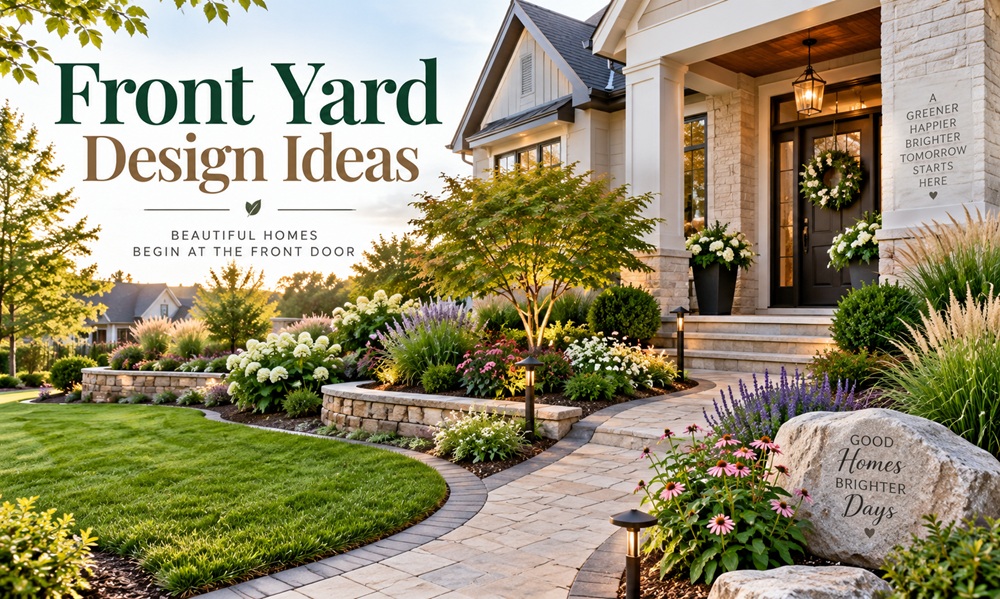
A front yard works hardest when it does a few jobs well. It should lead visitors to the door without confusion, frame the house instead of hiding it, and stay presentable without eating every weekend. The front yard design ideas below are grouped around those jobs, so you can borrow what suits your lot rather than copying a complete look from a photo.
Start with the route from the street to the door
Most front yards fall apart at the walkway. A narrow, straight strip of concrete running along the edge of the lawn feels like an afterthought, and visitors read the whole property that way. A wider path, ideally around four feet, gives two people room to walk side by side and makes the entry feel intentional.
Material matters less than shape and scale. Pavers, poured concrete, flagstone, and gravel with steel edging can all look good when the path has a purpose. A gentle curve works when it avoids something real, like a mature tree or a slope. A curve with no reason behind it just looks wandering. If the lot is flat and the house is symmetrical, a straight path with matching planting on both sides usually looks calmer and more confident.
Give the front door a proper landing too. Even a small paved pad, big enough for a bench or a pair of planters, tells people they’ve arrived. It also solves the common problem of a door that opens straight onto a step.
Layer the planting so the house sits inside it
Plants set in a single row against the foundation make a house look like it’s wearing a skirt. Layering fixes that. Put taller shrubs or small ornamental trees at the corners and beside the garage, medium shrubs under windows, and low perennials or groundcovers along the front edge of the bed. The eye then travels from ground to roof in steps instead of hitting a wall of green.
Pay attention to mature size. A shrub that looks perfect in a one gallon pot may eventually swallow the window behind it. Check the plant tag or a reliable regional extension service for expected height and spread, then plant for that size. Leaving gaps early on is fine, and a few annuals or a layer of mulch will cover the space while the shrubs fill in.
Repetition keeps layered beds from looking messy. Choose a small palette, maybe two shrubs, three perennials, and one ornamental grass, and repeat them along the bed in groups of three or five. Odd numbers tend to look more natural than pairs.
Front yard ideas matched to your lot
Small and narrow yards
Limited space rewards restraint. One strong focal point, such as a single multi-stem tree or a bold container by the door, does more than a dozen small features. Vertical elements like a slim trellis or a tall evergreen column add height without using up the footprint. Keep the hardscape simple so the yard doesn’t feel chopped into pieces.
Sloped yards
A slope can be an asset. Low retaining walls or terraced beds turn a steep grade into planting space and slow down runoff. If the slope is modest, deep-rooted groundcovers and ornamental grasses hold the soil and need little mowing. A wide path with a few shallow steps built in often feels safer and looks better than a steep ramp of pavers.
Shady yards
Mature trees limit what grows beneath them, so build around the shade instead of fighting it. Hostas, ferns, hellebores, and many native woodland plants perform where grass struggles. Pale gravel, light stone, or a freshly painted door will brighten a dim entry. A mulch bed is almost always a better choice than forcing turf to grow in poor light.
Large open lots
Big yards can feel empty from the street. Break up the space with island beds that mix trees, shrubs, and grasses, and let the driveway and walkway form clear edges. A split rail fence, a low stone wall, or a hedge along the property line gives the yard a boundary and a sense of scale.
Rethink how much lawn you need
A lawn isn’t required for a good front yard, and a small patch of well kept turf often looks better than a large patch of tired grass. Consider shrinking the lawn to one simple shape and filling the rest with beds or groundcovers. Where the climate allows, low growing options like creeping thyme, clover blends, or native sedges can replace turf in spots people rarely walk on.
Drought tolerant plantings and gravel gardens suit dry regions, while rain gardens can handle runoff in wetter ones. Check homeowners association rules or local codes before removing a lawn entirely, since some areas set requirements for front yard coverage.
Driveways, garages, and the parts you can’t hide
Driveways and garage doors take up a lot of the view, so treat them as part of the design rather than something to apologize for. Softening the driveway edge with a strip of low planting, or breaking up a wide concrete apron with a band of pavers or stone, reduces its visual weight. Plant a taller shrub or small tree beside the garage so the door recedes. If the trash bins live at the front, a short lattice screen or a row of evergreen shrubs hides them without much cost.
Paint and finish count here as well. A garage door in a color that echoes the front door or trim feels deliberate, and a freshly cleaned driveway makes the planting around it look better. These aren’t glamorous changes, but they’re usually the ones people notice first.
Lighting, color, and the small details
Lighting changes the whole feel of a front yard after dark. Low voltage path lights, a couple of uplights aimed at a tree or the facade, and a good fixture by the door cover most needs. Warm white bulbs look more welcoming than cool white ones, and a few well placed lights beat a long row of identical stakes.
For color, take cues from the house. Silver and deep green foliage suit brick and stone, while soft whites and blues sit nicely against darker siding. Seasonal interest matters as well. A mix of spring bulbs, summer perennials, fall grasses, and winter evergreens keeps the yard from going flat for months at a time.
Small details tie everything together. Matching house numbers, a clean mailbox, crisp bed edging, and a doormat that isn’t worn out all signal care at almost no cost.
Mistakes that make a front yard look unfinished
- Plants set too close to the foundation or to each other, which leads to crowding within a few years
- Too many plant types and materials, so nothing feels connected
- Ignoring drainage near the house, which can damage foundations and drown plants
- Skipping edging, so mulch drifts into the lawn and beds lose their shape
- Forgetting buried utilities, since digging without checking where lines run can be dangerous and expensive
Calling your local utility locating service before any serious digging only takes a few minutes and is well worth it.
Where to begin
Pick the problem a visitor would notice first. For most houses that’s the path, the bare foundation, or a lawn that never looks good. Fix that one thing, live with it for a season, and let the next project reveal itself. Costs vary widely by region and materials, so price the walkway and any large plants first, since they take the biggest share. Smaller plants cost less and grow in, which lets you spread the spending over a couple of seasons. A front yard that grows in stages usually ends up looking more settled than one installed all at once.
