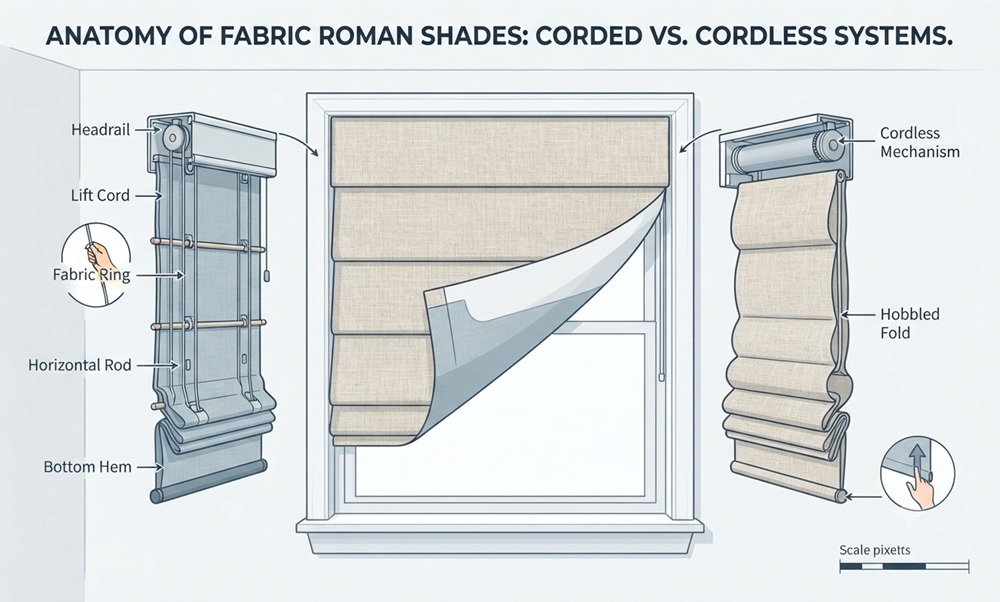
Fabric roman shades are window coverings made from a soft textile panel that folds into neat horizontal pleats as you raise it and falls into a smooth drop when you lower it. Unlike wood blinds or vinyl shades, they bring texture, pattern, and warmth to a window, which is why designers reach for them in living rooms, bedrooms, and dining spaces.
The fabric you pick shapes nearly everything about the shade, including how much light enters, how the folds hang, how the room feels at night, and how much upkeep you’ll face. So the real decision isn’t whether to buy a roman shade. It’s which cloth and lining suit the room.
Start With What the Window Needs
Before browsing swatches, think about what the window actually has to do. A bedroom facing the street wants privacy and darkness. A kitchen window over the sink needs something that tolerates moisture and splashes. A sunny living room may need protection for furniture and floors from fading, while a quiet reading nook mostly needs softness. Answer that first and the fabric choices shrink to a manageable list.
Popular Fabrics and How They Behave
Linen and Linen Blends
Linen has a relaxed, slightly textured look and filters light into a warm glow. It wrinkles and can shift a little with humidity, which many people consider part of its charm. Blends with cotton or synthetic fibers hold their shape better and tend to be easier to live with.
Cotton and Cotton Blends
Cotton is versatile and takes printed and woven patterns well. It’s a solid choice for casual rooms, kids’ spaces, and kitchens when lined properly. Heavier cotton weights fall in crisp, defined folds while lighter ones look softer.
Velvet and Heavy Textiles
Dense fabrics such as velvet or heavy woven cloth give a luxurious, formal look and block more light. They also add weight, so the shade needs sturdy hardware and a well made mechanism. These suit dining rooms, bedrooms, and libraries better than small windows, where the stacked fabric would cover too much glass.
Sheer and Light Filtering Weaves
Open weaves soften sunlight without shutting it out, and they preserve a view during the day. They offer limited privacy after dark, so people often pair them with a second layer or choose a more opaque weave for bedrooms and bathrooms.
Faux Silk and Synthetic Blends
Synthetic fabrics can imitate the sheen of silk or the texture of linen with simpler maintenance. Some resist fading better than natural fibers, which helps in sun heavy rooms. Check the manufacturer’s care guidance before cleaning.
How Fabric Weight Changes the Folds
Weight decides how a shade behaves when it’s raised. Light fabrics make soft, billowy folds that can look a bit casual, and they may not stack neatly. Medium weights usually give the cleanest, most even pleats. Heavy fabrics create deep, structured folds but take up more space at the top of the window when the shade is fully open, which matters if you want to keep the view unobstructed.
If you’re unsure, ask the maker how a specific fabric stacks, or look at a finished sample rather than just a flat swatch.
Choosing a Lining
Lining changes how a shade performs more than most buyers expect.
A standard lining adds body, protects the face fabric from sun damage, and improves privacy. A blackout lining blocks most light, which suits bedrooms, nurseries, and anyone who sleeps during the day. A thermal or insulating lining adds a layer that can help reduce drafts and heat transfer near the glass. Interlining, a soft layer sandwiched between the face fabric and the lining, gives a fuller, more tailored fall to the folds and is usually found in custom work.
Patterns, Colors, and Pleat Visibility
Solid colors in neutral shades blend with walls, which keeps focus on the room’s other elements. Stripes elongate a window and read as tailored, while large scale prints work better on wider shades where the pattern has room to breathe, because pleats break a design into bands. Small repeat patterns tend to behave better across folds. Colors also look different in daylight than in a showroom, so order a swatch and hang it in the actual window.
Matching Fabric to the Room
- Bedrooms usually call for blackout lining and a weight that hangs smoothly.
- Living rooms can handle texture and pattern, and they benefit from light filtering when privacy isn’t a worry.
- Kitchens do best with washable or wipeable fabrics and a mounting position that keeps them away from direct splashes.
- Bathrooms need moisture tolerant materials and a lining that won’t trap dampness.
- Nurseries and children’s rooms should use cordless operation.
Layering Shades With Curtains
A roman shade can work alone or under curtains. When paired with drapery, the shade handles light and privacy, and the curtains add softness, color, and height. Hang the curtain rod higher and wider than the window so the shade stays visible and the window looks larger. Keep the curtain fabric and the shade fabric in the same color family or tone, but vary texture so the layers don’t look flat.
Cordless and Corded Operation
Cords are a known safety hazard around young children and pets. Cordless lift systems, where you raise the shade by hand, remove that risk and also give a cleaner look. Motorized shades are another option and suit tall or hard to reach windows. Follow the manufacturer’s safety guidance whichever you choose.
Mounting and Measuring
Inside mounts sit within the window frame for a clean, built in look, but they need enough depth and leave a thin gap of light at the edges. Outside mounts hang on the wall or trim above the window, cover more area, and can make windows look larger. Measure width and height in several places, use the smallest inside width for an inside mount, and follow your supplier’s specific instructions, since fit tolerances vary.
What Affects the Price
Costs vary a great deal, so it helps to know what drives them. Fabric choice is the largest factor, followed by the type of lining. Custom sizing generally costs more than ready-made widths. Cordless and motorized systems add to the total, and larger windows need more material and sturdier hardware. Comparing quotes that list fabric, lining, and lift system separately makes it easier to see where your money goes.
Ready-Made or Custom
Ready-made shades come in standard widths and a limited selection of fabrics, which keeps the price down and shortens the wait. They work well for common window sizes and rental spaces. Custom shades are cut to your exact measurements and let you choose fabric, lining, and lift system, which matters for odd sized windows, bay windows, or when a specific look is essential.
Caring for Fabric Shades
Dust them regularly with a soft brush or the vacuum’s brush attachment on a low setting. Treat spots gently with a damp cloth when the fabric allows it, test a hidden area first, and avoid soaking, since water can leave marks or loosen the lining’s adhesive. Many shades are spot clean only, so check the care label. Professional cleaning may be worth it for delicate or custom fabrics.
Making the Final Call
Order swatches, hang them at the window, and look at them in morning and evening light. Check how the fabric drapes when you hold it in folds. Ask about lining, cord options, and warranty before you pay. A fabric roman shade should still look good after years of daily use, so choosing the right cloth matters more than chasing a trend.