

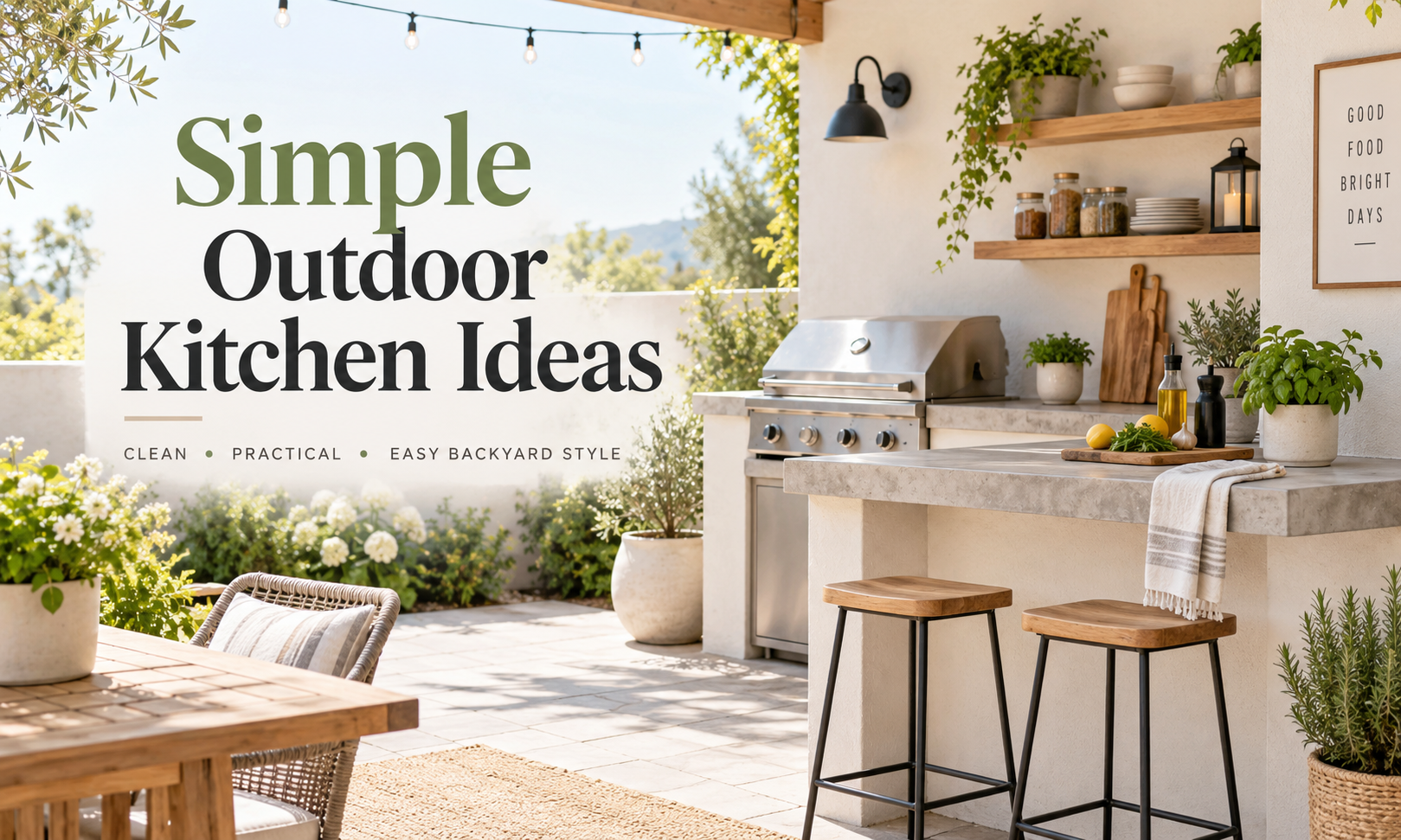
The simplest outdoor kitchen is a grill, a flat place to set things down, and somewhere to stash the tongs. Everything else is a bonus. If you start there, you can cook outside tonight and decide later how far you want to take it.
These simple outdoor kitchen ideas are built around that mindset. They suit small patios, rental balconies, and backyards where you’d rather spend on food than on construction.
Decide How You Cook First
Before buying anything, think about what you actually make outdoors. Someone who grills burgers twice a month needs a very different setup from someone who cooks full dinners five nights a week.
If you mostly grill, you need a good cooking surface, a place for plates and sauces, and storage for fuel and tools. If you also like to prep outside, add a bigger counter and a spot for a cooler or small fridge. If you rarely cook and mostly entertain, a bar style counter might matter more than a second burner.
The Grill and Table Pairing
This is the lowest effort setup and often the best starting point. Place your grill beside a sturdy table at roughly the same height, and you have a working kitchen with nothing permanent about it.
A folding or rolling table lets you pack things away for winter. Look for one with a rail or hooks for utensils and a lower shelf for supplies. Keep the table a small step away from the grill, rather than touching it, so the heat doesn’t damage the surface.
A Rolling Cart Kitchen
A kitchen cart on locking wheels gives you storage, counter space, and flexibility. Roll it out for dinner and park it against the wall afterward. Stainless steel and powder coated metal carts handle weather better than unfinished wood, and a cart with a drop leaf can double its work area when needed.
This idea shines on balconies and small decks, though check your building rules first, since many apartments restrict charcoal and gas grills on balconies.
A Single Counter Along a Wall
If you have a patio wall or fence, a long counter against it creates a surprisingly complete kitchen. Place the grill at one end and leave the rest as prep and serving space. Floating shelves above hold spices, plates, and lighting, and hooks underneath keep tools within reach.
A counter like this can be built from a simple frame covered in weather resistant tile, or bought as a ready made outdoor cabinet run. Keep the grill a safe distance from the wall and anything that can burn, following the manufacturer’s clearance guidelines.
A Bar Counter With Stools
A raised counter along the edge of the patio gives guests a place to sit while you cook, and it separates the cooking zone from the dining area without a single wall. Even a narrow ledge, wide enough for plates and drinks, can change how a small space feels.
It doesn’t need plumbing or a built in sink. Add a bucket of ice or a small beverage cooler on the end, and you’ve covered drinks too.
A Layout for Every Size of Space
A Balcony
Space is the main constraint here, so think vertical. A compact grill that your building allows, a narrow folding table that hangs on the railing or tucks against the wall, and a few wall hooks are often enough. Skip anything that needs a lot of floor room, and keep a clear path to the door.
A Small Patio
A patio of average size can hold a grill, a cart, and a two person bar counter without feeling crowded. Put the cooking zone near the house door so carrying food is short and easy, and leave the far side open for a table and chairs. Even a small rug under the dining area helps separate cooking from sitting.
A Larger Backyard Patio
With more room, you can spread the kitchen into zones. Place the grill and counter along one edge, the seating in the middle, and a fire pit or lounge area at the far end. Stay close to the house for the cooking zone anyway, since hauling supplies across a big yard gets old quickly.
Keeping Plumbing and Gas Simple
Gas lines, running water, and electrical circuits are where simple turns into expensive. You can sidestep most of that with a few choices.
- Use a propane grill instead of a natural gas line, and store the tank upright and outdoors.
- Carry water in a jug or use a portable sink with its own tank instead of tying into household plumbing.
- Choose a small electric cooler or battery powered lights in place of new outlets.
- Use an extension cord rated for outdoor use only for short, temporary needs.
If you eventually do want a permanent gas line or an outlet, hire a licensed professional, because mistakes with fuel or power can be dangerous.
Storage That Survives Weather
Dry storage keeps outdoor cooking pleasant. A lidded deck box holds cushions, charcoal, and wood chips. A cabinet with doors keeps utensils and spices clean, and a tight fitting grill cover protects the cooking surface between uses.
Hanging hooks and magnetic strips take up almost no space and keep the tools you use most within reach.
A Little Shade and Light
A cooking space is more usable when you can see what you’re doing and stay out of the glare. A market umbrella is the simplest way to add shade, and a freestanding canopy offers more coverage. For light, battery powered or solar lanterns do the job without any wiring, and string lights above the seating area add atmosphere.
Keep any shade structure well clear of the grill, since smoke and heat can damage fabric and create a fire risk.
Materials That Keep Things Easy
Simple kitchens work best with materials that forgive neglect. Stainless steel, powder coated aluminum, and sealed tile resist weather and wipe clean quickly. Treated wood is fine for a table or frame when it’s sealed regularly, while untreated wood tends to warp and darken within a season or two.
Choose finishes in a calm palette so that mismatched pieces still look like they belong together. A few matching accessories make a collection of separate items feel like a planned kitchen.
Ways to Grow It Later
The advantage of starting simple is that you can add pieces as you learn what’s missing. A second table, a side burner, a pizza oven, or a built in cooler can arrive one at a time. If you find yourself wishing for more counter space every weekend, that’s the next purchase. If the grill is fine but the guests keep crowding the cook, a bar counter might solve the problem.
Resist buying a large set all at once, because the best layout usually becomes obvious after a few months of real use.
Start With One Good Corner
You don’t need a showpiece to enjoy cooking outside. Pick a corner of the patio with some shelter, set up a grill and a surface at the right height, and cook a few meals there. By the end of the first season you’ll know exactly what your simple outdoor kitchen needs next.
